

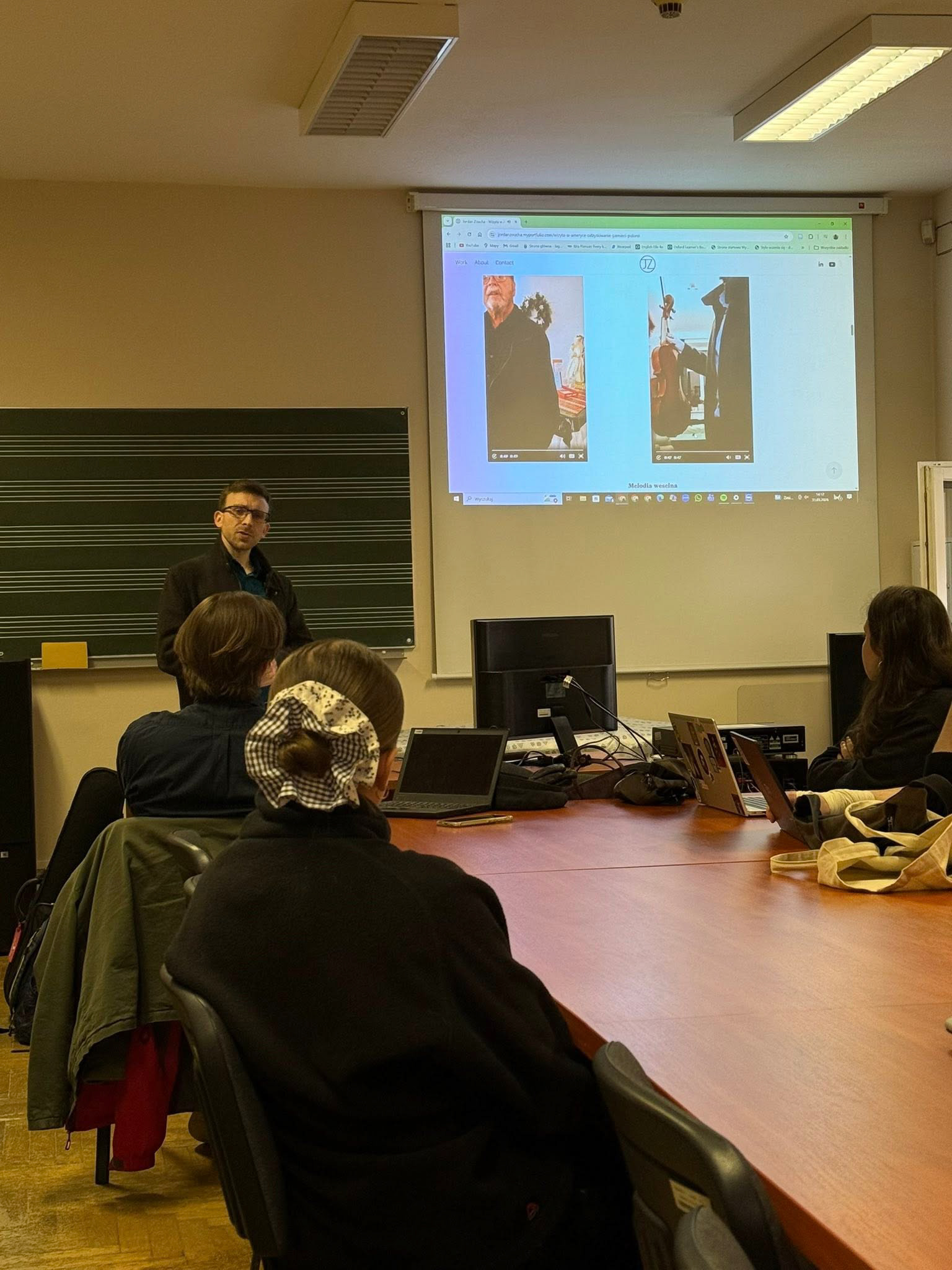
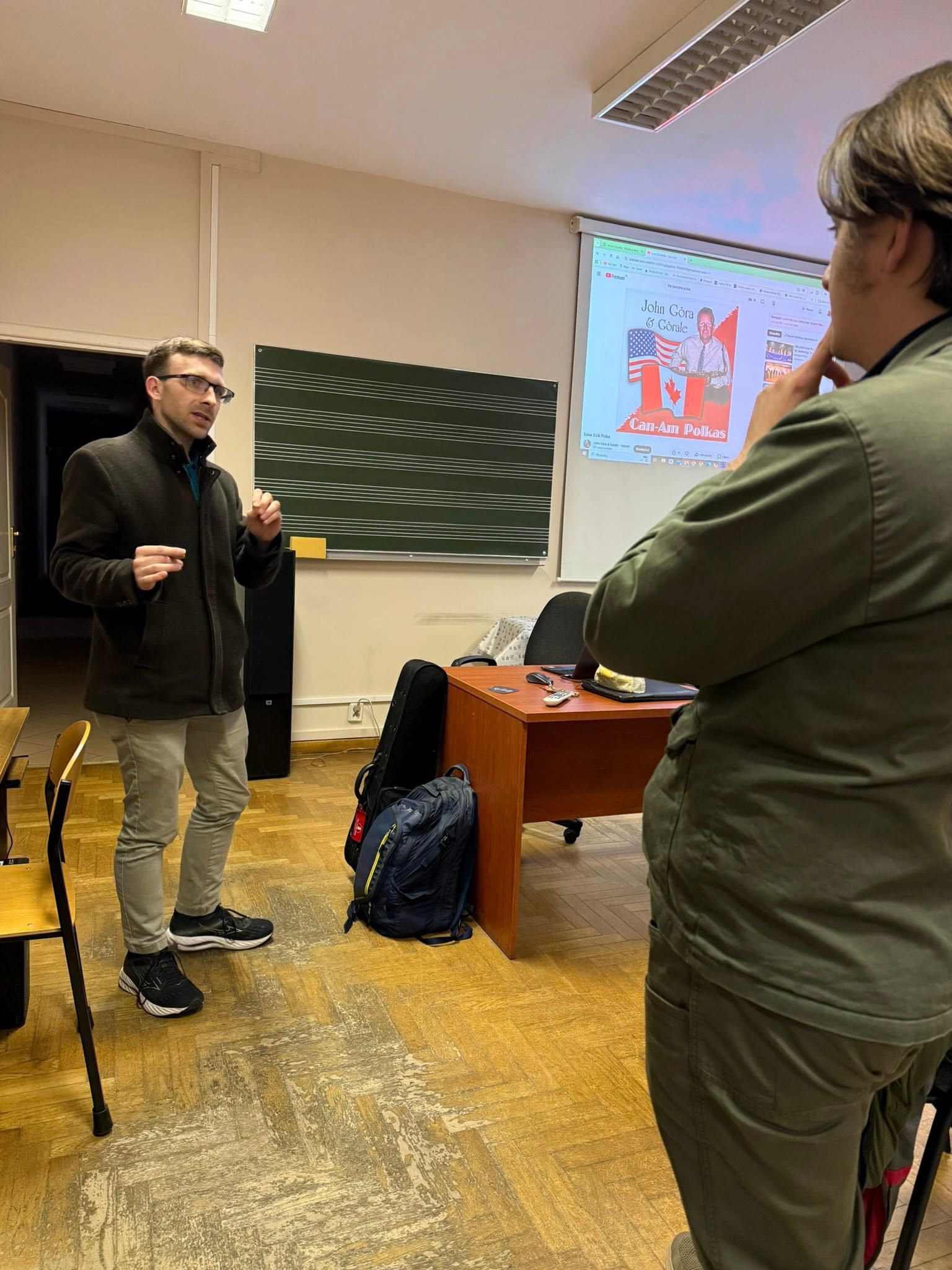
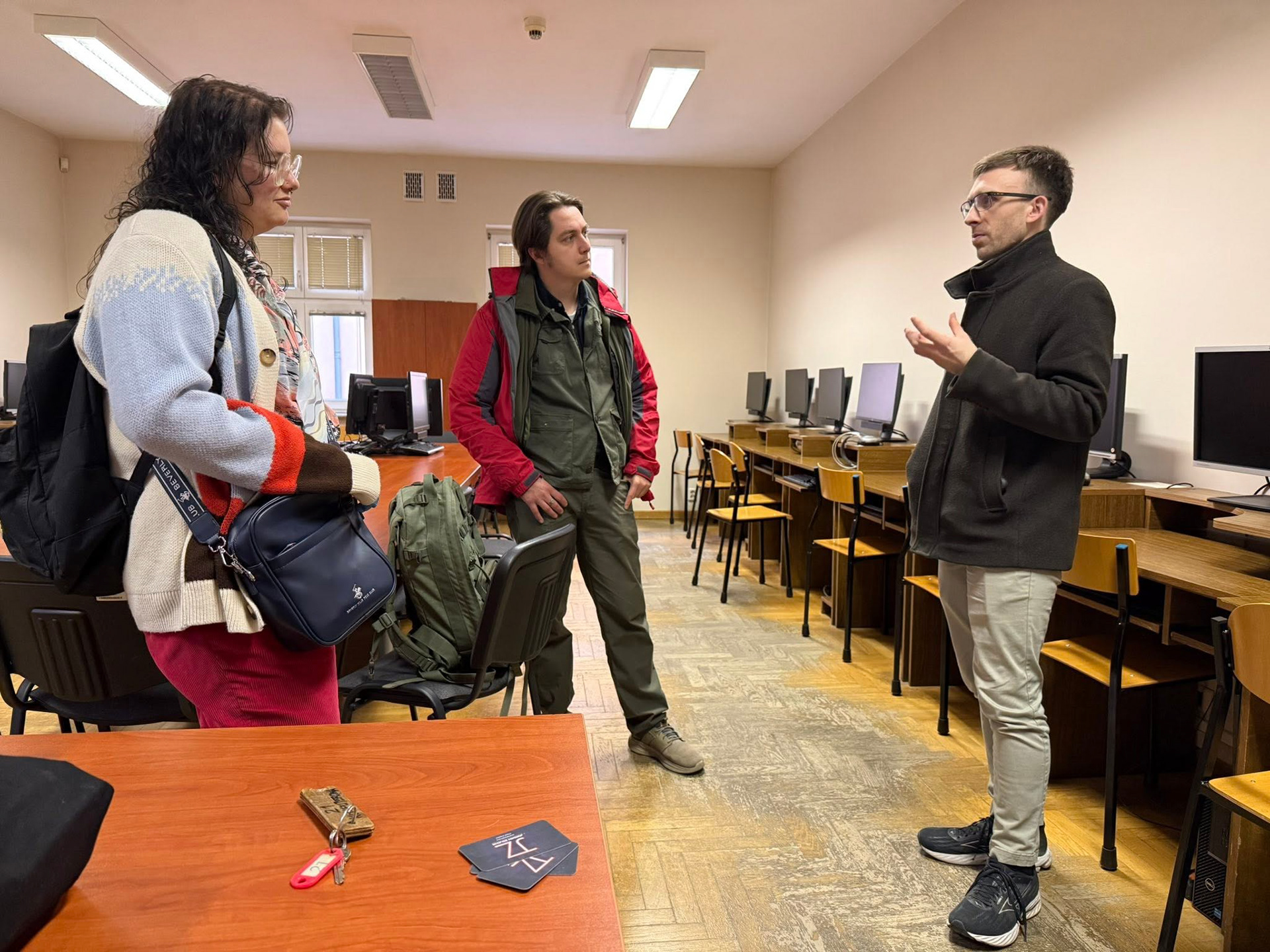
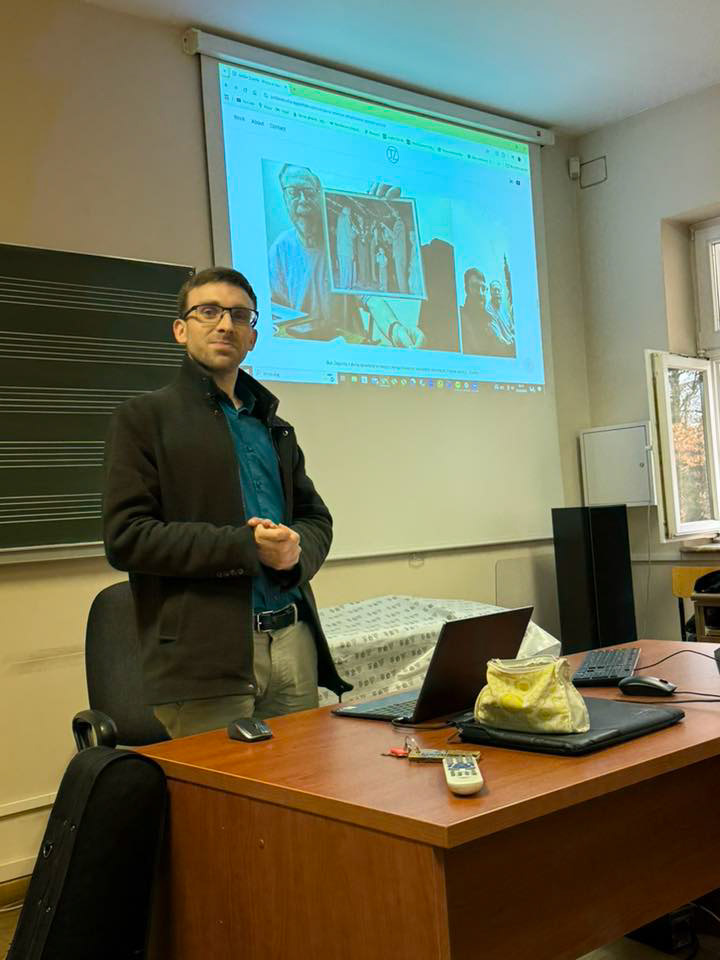
While in Kraków, Pani Joanna Zubel of the Jagiellonian University School of Polish Language and Culture invited me to speak to her musicology students about my pilot work and interest.
This visit formed a clear step in the public and educational dimension of the work. Invited to join an English-language class with musicology students, I presented a developing framework centered on cultural amnesia and the gradual loss of tradition within migrant communities. The aim was not only to explain, but to test ideas in dialogue, drawing on observations from work in the American Midwest among descendants of nineteenth-century Polish migration.
The discussion focused on three stages of cultural forgetting in early 20th century Polish communities in the rural midwest: the loss of language, the weakening of lived practice, and the fragmentation of ethnic identity.
At the same time, it turned toward the possibility of return, understood not as nostalgia but as disciplined re-engagement through language, fieldwork, music, and contact with living communities.
I had the opportunity to share with them interviews I have done in Nebraska, in which this rare music was recalled by elders, subsequently recalling their own grandparent's orally-transmitted music, as well as my efforts to rerecord and repopularize this music.
Particular emphasis was placed on Polish as a necessary tool for serious research, and on music as a living archive capable of preserving structures of meaning across generations.
The students were encouraged and engaged, and we opened it up to a dialogue afterwards. It was great to have the opportunity to meet with those who I hope will be my fellows as I work torward enrollment in formal ethnomusicological degrees,
The meeting confirmed that these questions resonate beyond diaspora contexts and can open productive exchange in Polish academic settings. It also reinforced that teaching and public speaking are not separate from research, but part of the same process: refining language, testing ideas, and placing work into circulation.
• Context: Invited guest session, talk on ethnomusicological themes regarding early 20th-century Polish immigrants in the rural midwest. English-language class for musicology students
• Theme: Cultural amnesia, migration, and return
• Focus: Three stages of forgetting: language, location, and large-scale 20th century social changes
• Method: Field observation, musical example, discussion
• Key element: Music as a living archive of memory
• Outcome: Productive exchange; refinement through dialogue
• Direction: Continued integration of research, fieldwork, and public engagement
• Theme: Cultural amnesia, migration, and return
• Focus: Three stages of forgetting: language, location, and large-scale 20th century social changes
• Method: Field observation, musical example, discussion
• Key element: Music as a living archive of memory
• Outcome: Productive exchange; refinement through dialogue
• Direction: Continued integration of research, fieldwork, and public engagement